

Choice of Key Differentiations in this Recording
- Physical Illness vs. Structural Suffering — Measurable biological and neurological conditions versus distress produced by coercive social structures.
- Natural Compassion vs. Coercive Indoctrination — Innate joy in enriching life versus obedience trained through rewards, punishments, and media.
- Giving from the Heart vs. Transactional Giving — Acting purely out of the joy of contributing versus acting from guilt, fear, duty, or buying love.
- Stimulus vs. Cause — What another person actually said or did versus the internal judgment that generates our anger.
- Observation vs. Diagnosis — Describing concrete sensory reality versus mixing in moralistic labels, interpretations, or evaluations.
- Natural Feelings vs. Life-Alienated Feelings — Bodily signals of unmet needs versus head-driven judgments.
- Outward Ears vs. Inward Ears — Directing moralistic blame at others versus turning the same blame against oneself.
- Action Requests vs. Vague Demands — Asking for concrete, doable behaviors versus demanding a change in someone’s internal attitude or feelings.
- Sincere Mourning vs. Apology — Sharing honest sadness and the unmet need behind an action versus playing a guilt and forgiveness transaction.
- Restorative Empathy vs. Retributive Justice — Understanding the human needs behind any action to prevent future harm versus moralistic punishment.
- Needs vs. Strategies — Connecting with universal human needs before debating or adopting specific actions or retaliation.
Time Stamps
00:00 01.01.01 – Welcome & Opening: Why ‘Healing’ & ‘Mental Illness’ Are Dangerous Myths
04:47 01.01.02 – Physical Illness vs. Structural Suffering (Q&A)
06:36 01.01.03 – Song: ‘Life’s Sweet Flow’ & Compassionate Nature
10:47 01.01.04 – How Compulsory Education & Media Disconnect Us
13:35 01.01.05 – Is Evil Human Nature? Jackal Language & Retributive Justice
17:47 01.01.06 – Giving from the Heart vs. Buying Love
23:39 01.01.07 – Putting on the Giraffe Hat: Transforming Anger
28:40 01.01.08 – Anger as a Suicidal Expression of Unmet Needs
33:35 01.01.09 – Audience Exercise: Observation vs. Evaluation (The ‘Should’ Word)
41:40 01.01.10 – Apology vs. Sincere Mourning & Giraffe Forgiveness
49:18 01.01.11 – Anger as an Alarm Clock & Empathizing with Extreme Violence
Book Mentioned by Marshall
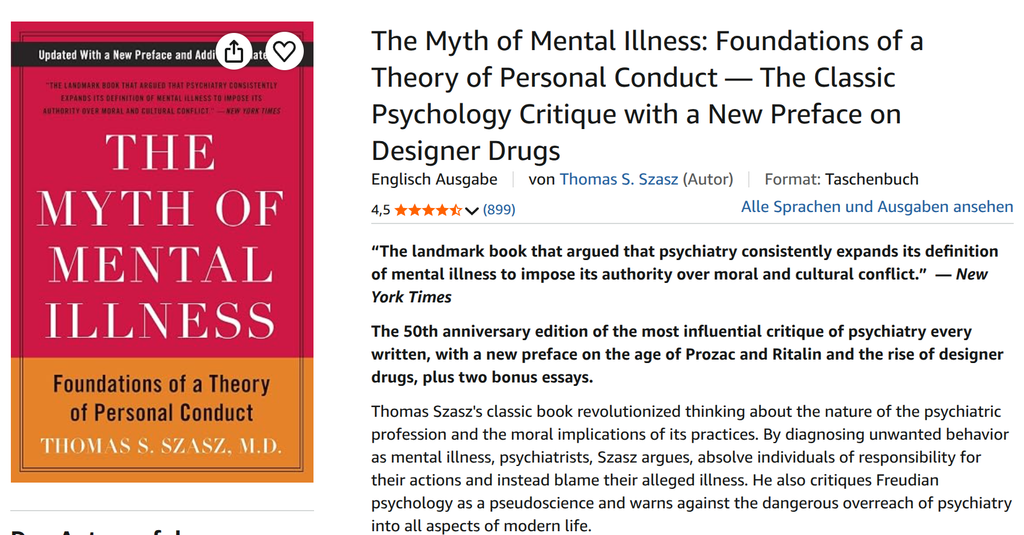
Embracing Emotional Pain – 1
1. Deconstructing “Healing” and the Myth of “Mental Illness”
- Rejecting Psychiatric Labels: Marshall opens by objecting to the term “healing” because it presupposes “mental illness.” Referencing psychiatrist Thomas Szasz’s The Myth of Mental Illness, he argues that psychiatric diagnoses lack scientific validity and correlate more with where clinicians trained than with the people they examine.
- Physical Illness vs. Structural Suffering: While acknowledging measurable biological or neurological conditions (such as autism or brain-scan-verified psychoses) as physical illnesses, he argues that widespread depression and violence (41% of pharmaceutical sales going to antidepressants) are predictable outcomes of 8,000-year-old domination structures in schools, courts, and workplaces.
2. Human Nature, “Life’s Sweet Flow,” and Coercive Indoctrination
- Innate Joy in Contributing: Introducing his song “Life’s Sweet Flow,” Marshall describes human beings as naturally wired to enjoy enriching life. Drawing on exercises conducted across 35 countries, he notes that recalling an act that contributed to someone’s well-being consistently brings people joy.
- How Education & Media Disconnect Us: Compulsory schooling (“an oxymoron”) replaces intrinsic joy with obedience through grades, praise, blame, and punishment—illustrated by an audience member’s memory of receiving the leather strap in an Edinburgh Sunday school that taught “God is love.” Consumer television, John Wayne Westerns, and Vince Lombardi’s “winning isn’t everything, it’s the only thing” distort natural empathy into retributive justice built around the word “deserve.”
- Transformative Evidence: Even people who commit extreme violence—such as solitary-confinement prisoners at San Quentin—rediscover deeper joy when given opportunities to care for patients on an AIDS ward.
3. Giving from the Heart vs. Transactional Giving
- Responding to a participant whose husband reacted angrily when she bought him 10 sets of clothes, Marshall explains that past exposure to guilt-driven, fear-driven, or love-buying gifts makes people distrust generosity.
- Quoting Joseph Campbell (“Don’t do anything that isn’t play”), he emphasizes that in NVC we never give “for others” out of duty or martyrdom; we act only when giving comes from the heart and meets our own joy in enriching life.
4. Putting on the Giraffe Hat: Transforming Anger into Needs
- Stimulus vs. Cause: Using the Giraffe hat as a cue for “quick meditation,” Marshall separates the stimulus (what someone said or did) from the cause (our own internal judgments).
- Outward Ears vs. Inward Ears: Moralistic judgments pointed outward (“they had no right,” “they deserve to suffer”) generate anger; the exact same judgments turned inward generate guilt, shame, and depression. Both are “suicidal expressions of unmet needs” that disconnect us from life.
- Natural Feelings vs. Life-Alienated Feelings: Physical pain, hunger, and sadness act as natural bodily signals of unmet needs, whereas anger, guilt, shame, and depression signal that we are trapped in head-based judgments.
- Anger as an Alarm Clock: Rather than repressing anger (which Marshall notes is common among neighbors’ descriptions of serial killers), he treats anger as a wake-up call signaling two things: (1) a need is unmet, and (2) our current thinking is guaranteed not to meet it without cost.
5. Live Exercises: Observation, Action Requests, Mourning, and Restorative Justice
- Observation vs. Diagnosis (Audience Exercise): Participants write down the stimulus for a current anger. Marshall coaches a woman whose brothers had her mother sign a will to separate observable actions (“asked her to sign”) from diagnoses (“illegal,” “incompetent”) and uncover the hidden “should” driving her anger.
- Action Requests vs. Vague Demands (Mother–Daughter Roleplay): Roleplaying a woman’s mother, Marshall shows why asking a parent “to care” is an undoable demand, whereas translating love into concrete, doable action requests (empathizing and speaking without blame) opens genuine connection.
- Sincere Mourning vs. Apology & Giraffe Forgiveness: Rejecting
"I'm sorry"as a superficial transaction to buy quick forgiveness, Marshall demonstrates sincere mourning—expressing honest sadness and naming the unmet need behind one’s action. Similarly, Giraffe forgiveness replaces retributive punishment with empathy for the unmet need behind any behavior, drawing on his work in prisons and with genocide survivors in Rwanda.
Transcript
But for now, I’m so glad to turn you over to Marshal Rosenberg.
Thank you. Good morning. Appreciate your wanting to spend the day with me and look at how nonviolent communication can contribute to this phenomenon that we call healing. And I need to get a little check about how much exposure you have had to our training. How many are starting from the beginning today? Haven’t had any experience at all? Okay, just a few. So we’ll try to catch you up without going too slow for the old timers. I’ll say a little bit about how nonviolent communication contributes to healing. But most of our day, I’ll ask those of you who would like to do some healing work to come on up and do some work with me. And after I do the work with people, then we’ll open up each time to reactions, questions from the audience.
Let me say a few things generally about this subject of healing. First, I don’t like the word healing. I don’t like it because it implies that there’s such a thing as mental illness. And I think that’s one of the most dangerous myths that we’ve ever evolved to come up with this term mental illness. If you want to see the danger of it, I strongly recommend a book called The Myth of Mental Illness written by a psychiatrist, Thomas Sass. That last name is S-A-S-Z. In that book, Sass first describes the unscientific nature of the concept. He shows that the words that the professionals use have no scientific basis, that the diagnoses that professionals make correlate more with where they went to school than with the people that they’re dealing with. So that’s one danger in the concept. It’s unscientific basis.
Another problem with this concept of mental illness is that it hides the political and structural causes of our suffering. It makes it seem like the reason that 41% of pharmaceutical sales are for antidepressant medicine, as though there is such a thing as bipolar disease, depression. Make it seem like that’s a disease rather than an inevitable result of how we educate people. When you have structures that are not doing too well in really serving people, but that are based on some thinking that’s been going on for about 8,000 years, which causes a lot of violence on our planet. Thinking such as there are people called superiors who know what’s right and who have the right to impose their will on the people below them through the use of blame, compliments, criticism, punishment, rewards.
When you’ve educated people that way, you’re going to have a lot of people very depressed. But not because they have a disease, but because the way we educate people to fit into the structures we created, you’re going to have a lot of miserable people. You’re going to have a lot of violence directed both outward and inward. So for these reasons, the unscientific nature of the concept of mental illness, and for its political dangers of taking our focus away from the cause of our suffering, which is the structures that we have created, the judicial structures, governmental structures, economic structures, these structures require a way of thinking that’s going to make almost anybody miserable.
So, any questions, then, about this theoretical introduction before we go further? Any questions, reactions? We’ll get the microphone up here. Yes?
Would you say there’s no such thing as mental illness? I mean, schizophrenic? Autistic?
I would say that there are physical illnesses, such as autism. I think it’s caused by something measurable. You can measure some things in the blood and in the brain scans, which can scientifically show you the person has a physical problem that affects their mental thinking. But I would prefer to call that a physical illness, not a mental illness. I’m glad you asked that.
So, just to clarify, would you consider things like schizophrenia for people… I work with people who have problems with serious voices, telling them bad things, and various psychoses. I would call those…
If they’re responsibly diagnosed, I would call them physical illnesses. For example, when I used to be in private practice, I used to see people who would tell me about these voices, and there were two neurologists in town that I trusted to make a scientific diagnosis. And when they told me that they saw signs in the brain scans or in the blood of an illness, yes, I would call that a physical illness that causes mental effects. And when these people were given some medicines, it was very helpful at times.
Any other questions? Well, then how do we… I’ve just taken away this one concept, but how do we look at the fact that so many people are depressed, that some people are violent toward themselves and other people? How do we look at this phenomenon within the framework of nonviolent communication? And let me introduce that with a song that will get us into how I see these phenomena that we call mental illness. It’s a song I wrote called Life’s Sweet Flow.
I want to stay in touch With life’s sweet flow
And spread loving waves Wherever I go
I want everything I say or do
To bring strength, warmth And light to you
I want to stay in touch With life’s sweet flow
And spread loving waves Wherever I go
I like being aware We don’t have to achieve
Life’s a gift We have only to receive
I want to stay in touch With life’s sweet flow
And spread loving waves Wherever I go
So, to me, that’s our nature. That’s what we are. There’s nothing that we human beings enjoy more by our nature than compassionate giving. Nothing.
And I don’t base that on some faith. I work in about 35 countries around the world and one of the exercises I often start with is to ask everybody to think of something they’ve done recently that contributed to somebody’s well-being. Something they had done that had enriched somebody’s life. Now, most people have a lot of trouble thinking about it because we do so many of these things every day we don’t think about it. Probably each of us does a hundred of these kinds of things every day. We say or do things that enrich somebody’s life in some way. But when they find these things, I ask them then How do you think that affected that person’s life? How do you think they felt when you did that? They focus their attention on that and then I say to people How do you feel right now when you see how your power enriched somebody’s life? And smiles, beams and then I ask people Do you know anything that feels better than that? More fun than willingly contributing to life and seeing how life can be enriched by our power. So having asked that to thousands of people around the world, I feel that’ s our nature.
Well, if that is how come all the violence? Well we get educated. That’s the problem. We get educated in a way that disconnects us from life’s sweet flow. We get educated, for example, if you have ever watched this thing called television for five minutes or more in your life, you’ll get disconnected from that. You’ll think that the happiness in life is eating a McDonald’s hamburger. You can’t imagine that people can survive without them. So we get educated. We get educated in schools by teachers that teach us violent language such as good boy good girl bad boy, bad girl that’s correct, that’s incorrect and that use punishment and reward to impose indoctrination which we call education but it’s really indoctrination. Can you think of a more funny oxymoron than compulsory education? Isn’t that tragic?
Marshall? – Yes. – Do people feel alive when they’re like killing people?
Oh yeah. There’s a lot of people feel just wonderful when they’re killing people because as Walter Wink the theologian says we get this distorted this basic natural joy of contributing to life but we educate people in a way that now makes violence enjoyable but when I I work a lot with people who’ve done a lot of acts of violence. I can tell you, when we bring them back to life, they get far more joy out of contributing to people’s well-being than they did with the violence. Right not too far from here, over in San Quentin. Some of the gentlemen there that were doing the most violence in solitary confinement, they finally get quite nice if you allow them to be nurses in the ward where people are very sick with AIDS and other things. If you give them a chance to nurture and contribute to people’s well-being, it makes the violence not so much fun.
Yes. Yes.
I heard a radio show at one point where a surgeon or some higher up in the Red Cross was being interviewed. And one of the questions that they’d asked him was, aren’t you shocked at how good people are and wonderful? And he said, quite the contrary. I’m shocked at the evilness with which people treat each other, or something of that sort. It’s not an exact quote. Is evil part of human nature as well?
No, no, no, no, no. – Evil. Evil, negativeness, or is there a part? – All you have to do, though, to teach people to evil behavior is teach them a language that I call jackal.
Teach them to think there’s a right and a wrong way to do everything.
And then if you want to make them really violent, teach them the concept of retributive justice. That’s based on the murderous word deserve. Teach people that if you get one judgment that you’re bad, you deserve to suffer. So all you’ve got to do to get people disconnected from their compassionate nature is get them exposed to that kind of thinking. Teach people there are such things as freedom fighters and terrorists. And then they’ll enjoy giving a lot of money to bomb people. See?
Also, give them a television set where children, by the time they’re about 10, have watched 20,000 acts of violence, most of them committed by the hero at the climax of the program. So you can take people that are very compassionate but indoctrinate them that way. And then, yeah, they’ll enjoy.
When I was a kid, I saw John Wayne almost wipe out the whole human race. And to remind myself that that’s what the good life is all about and what a real man is like, I have a picture of John that I keep. Shows him with six arrows in him. And he says, it only hurts when I laugh. So that’s the world I grew up in, you see.

Winning, as Vince Lombardi, the coach of the Green Bay Packers once said, winning isn’t everything. It’s the ONLY thing, you see. Winning, consumerism, and killing off the bad people. If you get educated to think that’s the good life, you’re going to have a lot of miserable people and a lot of violence.
There’s whole cultures that don’t think that way.
They have hardly any violence.
Yes?
To your question of how we’re educated, I was going to school in Edinburgh. And I went to Sunday school. And they taught me God is love. And in the school that I went to, there was certain punishment. And you got a strap on your hand. And you got it for speaking in class. I once got the strap for being behind the teacher when going back into the schoolyard. And I didn’t know why I should be punished for that. And so if you pulled your hand away, you would get another strap on your hand. So I had a problem with that. First of all, we’re being told God is love. And one of the teachers at the school went to my church. And I thought, if they teach God is love, why are they punishing me as a child? So I just wanted to say that as to the educational system in those days. This was back in the 50s.
Some parents will actually, when they’re punishing their child, say, I’m doing this because I love you. I have to teach you to do what’s right.
So we very closely associate love with violence.
I have a question about you talk about the good. You said you visited 35 countries, asked a few thousand people to think about what things they did for other people, contribute to it. And other people feels wonderful. And I had a question about how you, I mean, I recently realized, I mean, there was one day when I was meditating. And I suddenly realized I was constrained myself a lot in the recent years. And that was direct contribute to the one early argument with my husband. And it’s like we were financially separate then when we just married. And I remember one day I bought like 10 sets of clothes for him. And I asked him to try it on. If it’s not fit, I can return. And he tried two sets. And he gets very angry. He said, why are you wasting my time? And he said, you are not doing it for me. You’re actually doing it for yourself to satisfy your vanity. And it was very hurt. And it also teaching me, besides I feeling hurt, it’s also teaching me what I think is good for other people. It’s not necessarily what they want. So if you’re asking, so how I contribute to other people, how, I mean, lots of times when you do things, the communication is not available. How can you be sure you are doing something? It’s really wonderful for other people rather than just you think it’s wonderful for other people. Because there’s a distance.
Well, it sounds like you have a problem that most of us are going to have, even though it might be our intention to contribute to somebody’s well-being. If the other person has ever experienced any of the following, it will be very hard for them to trust your motives.
For example, if the other person has ever had anybody give to them out of guilt because they think they should give this, and if you don’t give it, that you can’t be loved. So if he’s ever experienced that, any gift, he can’t see the beauty in it.
Or if he’s ever been exposed to somebody who gives to avoid punishment, they’re afraid they’ll be punished if they don’t give. It will be hard for him to receive that gift.
If he’s ever had anybody that uses giving to buy love, they give things to others so that the others will love them.
So if people have ever experienced anything like that, then they’ll respond as you said he did. Because it’s hard for them to trust that this is a gift from the heart. They’ve probably been exposed to so many people in the past who have given for these other reasons.
Yeah, well, I guess that’s one side of stories. But that’s all the other side and more is that what I can do, right? If I try to contribute something to people, how can I know for sure that I’m actually doing something really for the people benefits rather than for my own?
Oh, this is a critical question. How do we know? First of all, make sure you never do anything for others. Really, I’m serious. They’ll pay for it if you do. Now, this isn’t that radical because what I’m suggesting, you already, you never do anything for others. No human being ever does anything for others.
Oh, I don’t agree with you. I’m a martyr saintly type. I sacrifice myself for my family.
Yeah, and they’re going to pay for it, too. You’re not giving to the family. You’re buying your way into heaven. You probably believe that if you are a good boy or girl your whole life, then when you die, you’ll go to heaven. And if you don’t, you’ll go to Detroit. To hell, to hell … I get Detroit and hell all mixed up, I grew up in Detroit.
So no, we never do anything for others, we, in non-violent communication, we try to remember only give when it comes from the heart, when it’s meeting your need, the strongest need that human beings have to contribute to life. Make sure you’re doing it for yourself, then the other person can benefit by it and not have to pay for it. Don’t do anything out of guilt, don’t do anything for rewards, don’t buy love, give from the heart.
Now, that’ll be hard to scrape off the learning that we’ve had if we ever went to school where you learn to do things to get grades, or you go, because you gotta do that if you live in a terrible culture that gets you to work for money. So how sad to ever do anything for grades or money.
Don’t do anything that isn’t play, that’s what Joseph Campbell, the gentleman who studied all the religions on our planet for 43 years, concludes that that’s what they’re all saying, if you hear them the way he did, they’re all saying the same basic message. Don’t do anything that isn’t play, and it’ll be play if we do it willingly because we see how it will enrich life, and that’s our only motive. But of course we’re educated in a different way that disconnects us from that.
Yes?
Jackal Thinking
Hi, my name’s Marcy, and I’m just wondering how can one work with these principles and also express anger so it’s productive but not harmful?
Okay, so how do we express anger in a way that’s helpful and not harmful? The first thing to do, if you want to use anger in a constructive way, first thing to do when you’re angry, put on a giraffe hat.

You gotta earn a living somehow, you know, you maybe have to make an idiot out of yourself. Now for those who haven’t been with me before, before you leave, let me explain the giraffe, I just use that as a symbol of non-violent communication. And what I use this as a symbol of is what some people would call quick meditation. Quick meditation.
So whenever you get angry, I would suggest, first of all, shut up.
Don’t say or do anything.
Instead, quick put on a giraffe hat.
Now next step, when you have the giraffe hat on, just see what’s going on in your head that’s making you angry. Be conscious, it is never what the other person did that makes you angry. Now you all knew this as you were children, I’ll bet. In our neighborhood, we had a poem to remind us that it’s never what other people do that make you angry. Remember the poem? Sticks and stones can break my bones, but names can never hurt me. What other people do can’t hurt you, make you angry, please you.
I’m a little confused, so sometimes for me it’s memories, say if, well I’ll just put it right out there, like if I’m abused or sexually abused.
So somebody comes up and throws me to the ground and rapes me, okay?
That’s actually happened.
Yeah. Now, if I get angry, it’s not what the other person did. That’s a stimulus. I know people that have had that happen, they don’t get angry, they feel guilt and shame. They think it’s their own fault. I shouldn’t have, you know, it’s something with me. Then they don’t feel angry, they feel depressed, guilt, shame. But that’s because they put jackal ears on inward, you see? They think that because this person did that, there’s something wrong with me.
But anger means we have put the ears on this way. And we’re telling ourself this person had no right to do that, this person is a beast, this person’s a monster, this person deserves to suffer for what they’ve done. What could make a person like this do something? It’s that kind of thinking that makes us angry.
But many of us are very talented, we are ear-bidextrous. We can put these on both ways real fast. So we go through life feeling angry, guilty, depressed, angry, guilty, depressed. And it doesn’t take sexual abuse to do that. It can be something a person says, angry, guilty, depressed, angry, guilty, depressed. So regardless of what it is, whether it is somebody sexually doing things to us that we don’t like or whatever, see the thinking. Start by seeing what you’re telling yourself that’s making you angry.
Next, be conscious that all of the thinking that makes us angry is a tragic, suicidal expression of an unmet need. Got it? The thinking that makes us feel anger.
I’m going to sit down so I can write this. Thanks a lot.
Yeah. The thinking that makes us feel angry, depressed, guilt and shame. The thinking that’s going on in our heads at that moment is a tragic, suicidal expression of an unmet need or unmet needs.
There are whole cultures that do not feel anger, depression, guilt and shame. They’re not taught to think in the way that creates those feelings. They have strong emotions, but not anger, depression, guilt and shame.
Yes.
Hi. I just wondered if you can continue a little bit with that.
Yeah, I’m going to continue with that because that’s just that she asked how to handle anger and I’m talking about only the first step. Put on the hat and become conscious of what I’m telling myself.
Next, I’m saying if I’m angry, whatever I’m telling myself is a tragic, suicidal expression of an unmet need. So translate the judgment that makes you angry into your need.
Another way of saying that is come back to life. Bring yourself back to life. See, anger, depression, guilt and shame tell us we’ve lost connection with life. We’re not connected to our needs. We’re up in our head thinking in a way that creates great pain on our planet. So become conscious of the thinking and then ask yourself what need is at the root of those thoughts? What am I needing in other words? What need of mine has been violated or not met?
And I’ll know I have found my need when the anger is transformed into natural feelings. Natural feelings are feelings that mother nature puts in us to let us know that our needs aren’t getting met. Like hunger, if my need for food isn’t getting met, mother nature puts hunger into if I didn’t have that hunger, I wouldn’t know I have a need that isn’t getting met. Pain, yes. Pain tells me that physical pain tells me some needs of my body aren’t getting met. Sadness tells me sometimes my need for connections aren’t being met. So when our needs are not getting met, we feel naturally some discomfort, some feelings that wake us up to say, hey, your needs aren’t getting met.
But anger, depression, guilt, and shame tell us we have not connected to our needs. We are operating under the function of our culture that has educated us to be nice, dead people. See, we have been educated to be nice, dead people. Educated in schools where the primary objective is to teach students obedience to authority. To work for rewards called grades. Because our economy is based on getting masses of people to do meaningless work eight hours a day, 30 years of their lives. So to prepare them for that, you need to brainwash them. Put into their head a language of subservience to authority. But unfortunately, the side effects of that language are anger, depression, guilt, and shame.
So now that I have brought myself back to my needs, then what do I do? Then I do one of two things. I empathize with the person who has behaved in a way I don’t like. I see what was needs of theirs they were trying to meet by doing what they did. Or I tell that person what is alive in me, what pain is in me because of what needs of mine weren’t met. And I make a request to that person of what I would like them to do about it. So that’s how we handle the situation.
While we’re angry, we know whatever you say while you’re angry is very unlikely to get you what you want for reasons you won’t have to pay for later. Yes, if I’m angry with one of my children for not cleaning up the room, and I say, get in there and clean up the room. How could you be so stupid and selfish and lazy and so on? They might go in and clean up the room, but I’ll pay for it. I’ll pay for anything people do for being blamed or to avoid blame. Or go in and clean up your room and I’ll raise your allowance. I’ll pay for that. – Twice. – Pardon? Why? Twice. Yeah, yeah. – Self-empathy from anger and… –
Exercise
You want to do some work on self-empathy. Okay, well, let’s do a little exercise on that. Let’s all get angry. Let’s all get angry. And for those of you who are saintly and have never been angry, I’ll give you my brother’s telephone number. Go and call him up. Within five minutes, you’ll be angry. And you can come back and do this exercise. Now, my wife is saying, no, he’s not that way. I’m just kidding. I asked him though, the last time I saw him, how does it feel to be famous all over the world? And I told him how I bring him up in workshops and he was very disappointed. He said, nobody’s ever called me.
Okay, you got to write down the stimulus for your anger. What did the person do that stimulated your anger?
(Pausing to give people space to do the exercise)
Okay, now, what I just asked you was to write down an observation. I said, what was the stimulus for your anger? I hope you didn’t write down the next thing we’re gonna look at. I didn’t ask you what the cause of your anger was. So if you mixed up your thinking that causes the anger with the observation, oh, that’s serious. We got to work on that. We never want to mix up observation and evaluation. We don’t want to trick ourselves into thinking it’s what the other person does that’s the cause of our anger. It’s the stimulus. So let me hear a couple of these. What did this person do that stimulated your anger?
My brothers illegally had the will signed by my mom who was not competent at the time. So the will awards them the estate.
I’m sorry, I can’t hear it.
Okay, sorry. My brothers illegally had my mom who was not competent at the time sign her will which awarded everything to them.
Your brother had your mother sign the will in a way that you interpreted as illegal.
Yes, because she was not competent at the time.
Yeah, because you interpreted her as not competent at the time.
See, I heard two interpretations in there. I helped you out by making the interpretations, clear interpretations. Because you could go on for centuries arguing over what’s legal and what’s not legal. You see, so those are diagnoses. He made her …, He asked her to sign this something in a way that you saw as illegal.
Because she was not competent at the time.
Because you saw, you interpreted her as incompetent.
Yes.
Okay, see, incompetent and illegal are diagnoses. I asked for an observation of what did he do. What he did was ask your mother to sign something. That was the observation. Okay.
And now you’ve already jumped ahead to the next step. The next step is – What is the cause of your anger?
And the cause is you interpreted this as illegal.
And what else that made you angry? What did you tell yourself about what brother did that made you angry?
I know that my mother was incompetent.
You have great confidence in your diagnosis that she was incompetent.
Yes.
But then why would you be angry? Why wouldn’t you be sad for mother? So if you’re anger, I’m asking for what is the cause of your anger?
Because I was not part of.
No, it’s not that you were part of it. I’m already guessing the cause of your anger.
Because I’m not part of the estate.
No, no, no, no.
Because I did not receive.
No, no, no, no. I bet you that those are, that’s accurate, but that’s not the cause of your anger. I can see in your eyes, you have the SH word in your head.
(Laughs out loud.)
That the brother shouldn’t have done that.
Exactly. Yes.
Exactly, exactly. I’m psychic, you see.
But I know that anytime there’s anger in a person’s head, heart, there’s a SHOULD in their head.
That’s the cause of anger.
And we’ve been given, since that’s such an important word, should, in the jackal culture, we have about a thousand variations of the word SHOULD. SHOULDN’T. For example, words like selfish, inconsiderate, inappropriate, freedom, terrorist, rather, see.
Those are all variations on the word should.
And that’s the cause of the anger.
And you think he shouldn’t have done that. There’s something wrong with him for doing it. And what is the wrongness of him? What is he for doing that? What do you tell yourself he is for doing that that makes you angry?
–
Well, we don’t have to do it now, but the main thing is, the cause is the thinking.
He shouldn’t have done that.
It’s wrong.
After today, you won’t think anything.
You will not have the word should in your consciousness.
But I sometimes overestimate my teaching ability.
What caused something to be alive in me that someone did was I observed that they told me that I violated them and had no manners. So that’s what the person said.
You gave a direct quote and that answered my question. That was the stimulus. And now, what was the cause of your anger? What caused your anger? I guess my thought that they shouldn’t say that. Yeah, another should, you see. The S-H word, one of the most dangerous words human beings have ever developed. But it’s important if you want to make violence enjoyable. There was another thing that the person said, too, that I didn’t know how to respond to. They were almost demanding, or they really wanted, an apology. The other person not only said those things to you, but they wanted an apology. Right. They asked for an apology. I was wondering if it was appropriate at times to give an apology. Now if I answer your question, I’m not using nonviolent communication. Because if I’m using nonviolent communication, I don’t think there is such a thing as appropriate or inappropriate. So would it be in harmony with my needs or values if a person did that? Is that what you’re asking? Yeah. Yeah, I guess it would be an issue of values. If the person did what? If they asked for an apology? They’re asking because of their values. If anybody ever asks for an apology or offers an apology, I would suggest they’ll enjoy life more if they never apologize or ask for apologies. But instead, know the difference between apology and sincere mourning. Because my experience is of the hundreds of people that I’ve asked who see the difference between apology and sincere mourning, who would ever want an apology? Apology is part of a violent game. Would that go also for forgiveness? Forgiveness, it depends which kind of forgiveness. Jackal forgiveness or giraffe forgiveness.
Let me show you jackal forgiveness. Here is a child who has done something that the parent doesn’t like. Say you’re sorry. I’m sorry. No, you’re not really sorry. I see it. This is the retributive justice that we have in our culture based on this violent concept of deserve. The parent doesn’t think the child has suffered enough for what they have done. They deserve to suffer more. No, you’re not really sorry. Now the parent judges that they have suffered as much as they deserve. And then the parent says, okay, I forgive you. That’s jackal forgiveness.
Giraffe forgiveness is empathy. When you empathize with somebody for why they did what they did, there’s nothing to forgive. You only forgive when you think that what the other person did was wrong or bad. But if you empathize, you see that human beings every moment, every human being is doing the best they know how at that moment to meet their needs. So when you empathize with that, what was alive in the person when they did it, what need were they trying to meet, there’s nothing to forgive.
For example, when I work in prisons with people that do some things I really don’t like at all. Maybe sexually molest children. I start by empathizing with the good reasons why they do it. Because I’d really like them when they get out of that prison to have other ways of meeting their needs. But we know from our research in our prisons, the more you punish this person for that, the poor children when they get out. Our own research shows that two people, same act, for whatever reason, one goes to one of our prisons and one doesn’t, the one that goes to the prison far more likely to repeat the act or act more violently when they get out. Punishment is a losing game.
So the first thing I do is ask, can you tell me what needs of yours are being met by doing this to children? They look at me like I’m nuts. They tell me they’ve never been asked this question before. They might have been in prison three times and nobody’s ever asked them, what needs are you trying to meet by doing this? Here’s the answer I usually get. I do it because I’m dirt. And I say, hold it, I didn’t ask you what you think you are, I’m asking what needs of yours are met by doing that. Huh? What are you talking about? I think you’re doing it for the same reason that everybody does everything they do. For what? To meet a need. I’m confident that if we get clear what your needs are, we can find better ways of meeting those needs. Are you saying it’s right to do it? No, I’m not saying it’s right to do it. I’m not saying it’s wrong to do it. I’m saying you’re doing it for the same reason that every human being does everything they do. It’s the best they know to do to meet their needs at that moment. That’s forgiveness in a nonviolent communication way. A consciousness that every human being is doing what they’re doing not because they’re good boys and girls or evil boys and girls. It’s the best they know to meet their needs at that moment. Yeah? Yeah? This is a little hard for me to phrase this question because I understand in my heart, I think, the model, but I also have a need for a certain kind of language and how you language what you’re saying regarding… One question that’s going around for me is how do you speak to people who talk to you about well, what about a universal moral code of do no harm and what do we do with that philosophically? I know what you’re saying, but there’s a part of me that still needs an intellectual framework around it. Am I being at all articulate? You’re wanting to see how we might respond in nonviolent communication when people say certain things such as what was the statement they might make? You gave us as an example. Well, when I talk about this with people, they’ll say, well, what about a universal moral code? Is there no… Doesn’t NVC talk about… What about the universal moral code? Could you tell me which moral code and what your interpretation of it is? Well, it would be very basically do no physical, I know emotional, it’s always, there’s lots of interpretation, but to do no physical harm. To do no physical harm. So you’re saying you have a value of contributing to people’s well-being. Right. Yes. Nonviolent communication shares that. Nonviolent communication is not based on a new idea. Right. A gentleman I was working with in the village of Bet Zuhur in Palestine at the end of the workshop said, Marshall, I really like this training, but it’s nothing new. It’s just applied Islam. And I smiled and he said, why are you laughing? I said, yesterday I was in Jerusalem and an orthodox rabbi told me it was applied Judaism. The man that coordinates our program in Sri Lanka is a priest, a Catholic priest. We just worked a lot with Hindus in India and they tell me it’s their religion. So no, it’s, yeah, most fun game in town is contributing to one another’s well-being. That’s been known, I think, ever since human beings were on the planet. It was only about 8,000 or so years ago we started to educate people to live under kings. And then we had to shift the language and the values. Yes. I’m not sure you still deal with anger or not. If you still deal with it, I have a very strong example. Otherwise, you can go ahead. I’m having trouble hearing you. Oh, I’m not sure the agenda now and you’re still dealing with talk about anger? Yeah, yeah. Okay. So…
I got angry and frustrated when my mom was present and angry at myself for being angry and I’m angry at her as well and I’m very frustrated yes, you’re caught in a should hall of mirrors you’re telling yourself she shouldn’t treat me this way and then you get angry then you say to yourself I shouldn’t think that way then you see you’re thinking that way and you say well I shouldn’t think that I shouldn’t think that way yeah, I know that I just cannot get out of this should I mean parents should love kids, isn’t it? no, no, no, no unless you want them to hate children don’t tell them they should hate children or they should love children anything you tell a person they should do takes all the joy out of doing it if you want to take the joy out of somebody doing something tell them they should do it I did not tell them, I told myself I did not tell my mom she should love me because she thinks she did but now another problem you’re bringing up here is what do you mean by love? see I told you earlier some parents tell me they show their love for their children by spanking them so what would you I’m mother what would you like me to do, daughter to meet your need for love? if you can’t answer that question don’t expect to get your need for love met at least to care about my well-being and to care about my health now that’s not a doable request, daughter to care about if you want to get your need met, daughter you need to express your request in action language you need to tell me what you want me to do not what you want me to feel when you say you want me to care that doesn’t tell me what you want me to do what can I do to meet your need for love? see, daughter there’s a book called the five languages of love that shows we human beings fall into quite different categories about what meets our need for love so I’m behaving in a way that I think meets people’s needs for love but it’s obviously not working for you so I need you to tell me what you want me to do to better meet your need for love dad, just because my husband pick me instead of my sister doesn’t mean I’m evil so you want me to tell you what? that I’m a good nature person I’m not evil my mom every time tell me I’m evil because my husband chose me now I’m getting it so I’m hearing that you want me to first, to empathize with why you did what you did and you want me to express myself without blaming you is that what you want? oh, thank you, daughter now I can see what you mean by your need for love I can see better how to do it however I’ll need a lot of empathy for the pain I have inside before I can do that and I really need the empathy most when I’m saying those things to you so listen to Marshall today because he’s going to show you how to enjoy me when I talk that way thank you I have a question still about apologizing and sincere mourning yes if there is something that I’ve done like yesterday offended four people at work and looking back sort of realized that this and that and the other behavior wasn’t quite wasn’t a kind act on my part there is a part that I need to do something that I need to do to make it up to these people so there is some in my opinion there is some validity in doing some, I don’t know, apologizing I would suggest sincerely mourning what you did and say it to them say it this way say I feel how do you feel about what you did? awful and what need of yours didn’t get met by what you did? the need to feel safe and stability, security so then you would say to the people in sincere mourning when I did what I did or when I didn’t do whatever I’m feeling a deep sadness right now it didn’t really meet my need to contribute to all of our safety and security that’s sincere mourning but it’s far easier to just say I’m sorry because we’re taught to do that to buy quick, you know, forgiveness we’re taught to play that game there’s no sincerity to it you just say I’m sorry look sorry there is, on my part there is sincerity actually and that’s why I’m suggesting that you express yourself sincerely and I’m suggesting that saying you’re sorry it’s used so often as a trite way of buying quick forgiveness that it says almost nothing so in non-violent communication we suggest saying how you feel and what need of yours wasn’t met by what you did check it out with other people and I’ve never found anybody who would pick I’m sorry after they see the difference between that and sincere mourning I get it the other part that I found in the past that even when I do that people don’t feel that they were offended in fact that I’m the way they react back to me says there was nothing okay, maybe it didn’t bother them so much yeah I kind of look like a fool when I do that you didn’t know what? I look like a fool when I go up to them with this whole I feel very sad about what I did and it didn’t meet my need for said oh it’s okay, you don’t have to worry it wasn’t that much of a thing yeah yeah, so you’re wanting me to see that it wasn’t a big thing for you no but I’d like you to see how I feel I would really like some empathy for how sad I feel about it okay all right thank you yeah yes I was curious about your interpretation of anger as being dead and because when I’m angry I feel quite alive and I was talking with a counselor at one point she told me that my anger was a way of my knowing that I’d had enough of something which seems like more like hunger than death what I’m saying is that it depends how you define being alive if you define being alive having a shot of adrenaline in your system then, you know, that anger makes you feel alive but I define being alive as being connected to life and to me life is needs in action any living phenomenon has needs trees have needs dogs have needs flies have needs human beings have needs anything alive so to me being alive is to be connected to life to needs and anger tells me I’m disconnected from my needs and I’m thinking in a way that creates the anger now with this person who gave you this advice I think that person and I share some common alities about anger which is first if you are angry don’t think you shouldn’t be angry don’t think there’s anything wrong with being angry that just creates more of a problem use the anger as a wake-up call that reminds you of two things so whenever you feel angry use it as an alarm clock that tells you two important things number one a need of mine isn’t getting met number two I’m thinking in a way almost guaranteed not to get it met or to get it met in a way I’m going to pay for so anger is helpful don’t you want to know that?
those two things if they’re going on? So yes, anger tells us that. The worst thing we can do is repress the anger. Did you ever see what the quotes of serial killers are? No, quotes of the neighbors of serial killers, how they describe the serial killers. What a nice person, never got angry. So the worst thing we can do if we’re angry is think that nice people don’t get angry and push it down. I’m not saying that. I’m saying anger is a helpful sign that our needs aren’t getting met and we’re thinking in a way that’s creating violence on the planet and is likely not to get our needs met for reasons we want them to get met. Yeah. Yes, I’d just like to touch on this example about somebody getting pushed down and being raped. In fact, I’ll change the example slightly and say, let’s supposing somebody cut their hand off, too, into the bargain. And so they’re angry now. And it seems to me there are several things that are intertwined in what you say. And I would just like you to clarify. One of them is that you mentioned retribution. And it seems to me that if somebody cut her hand off, then quite apart from the fact that she’s angry, there needs to be a signal that goes out to the society at large that cutting hands off is not OK. So that’s one thing. The second fact of her feeling angry about that, I don’t know that telling somebody who just cut your hand off that I understand why you did it or that I’ll empathize. And I don’t know that that’s going to get me that many, that’s going to do enough for me. I’m not clear why letting go of my anger there is so purposeful. And what’s the actual news I can use for that example? What should I do? Well, I hope I haven’t gotten across to you that I’m saying let the anger go. I’m not saying just forget about the anger or not have it. I’m saying use it as a very valuable reminder that two things are going on. First, a need wasn’t met by having your hand cut off. And second, you’re thinking in a way that’s likely to perpetuate more violence. So I’m not saying be a nice person and start right off loving the other person. I’m saying come back to life and see how horrible it feels not to have this hand and how its basic needs for safety and respect are not met. And then come from that energy, come from that energy. I work with people in countries where horrible things have happened to them and to their loved ones. For example, I work in Rwanda where I have worked with people, all of whom have had one or more members of their family killed. And some of them are so angry, all they can think of is vengeance. And others have had the same thing happen to them. But they’re not angry, and they haven’t been angry. They have suffered less, and they’re doing far more to prevent this happening again.